THEE
S.E.E.D. INC.
WELCOME TO THEE S.E.E.D. INC.
Thee S.E.E.D. Inc. is dedicated to making a positive impact on our community. We strive to create a better world for everyone through our various initiatives and programs. Join us in our mission to sow the seeds of change and growth.

EVENTS
Leaving Gangs and Negative Peer Groups
Breaking free from gangs and negative peer groups is a challenging but life-changing journey. At Thee S.E.E.D. Inc., we provide the support and resources needed to help individuals make this important transition.
-
Guidance and Mentorship: Our mentors work one-on-one to offer encouragement, build self-confidence, and provide a positive influence.
-
Safe Alternatives: We offer access to programs, activities, and communities that foster a sense of belonging and purpose, replacing the need for harmful associations.
-
Skill Building: Through workshops and training, we help individuals develop new skills and opportunities for personal and professional growth.
-
Ongoing Support: We stay connected, ensuring that each person has the tools and resources needed to stay on a positive path.
Leaving behind negative influences is the first step toward building a brighter, healthier future, and we’re here to help every step of the way.
OUTREACH PROGRAM
At Thee S.E.E.D. Inc. , outreach is at the heart of what we do. We actively engage with our community to provide support, raise awareness, and make a meaningful impact.

PRISON OUTREACH

OUTREACH

PRISON OUTREACH

PRISON OUTREACH
TEEN DRUG & ALCOHOL USE IN THE UNITED STATES
Teen drug and alcohol use in the United States continues to be a significant public health concern. About 2 million teens (approximately 8%) used drugs in the past month.
We need to understand these numbers to help teens stay safe. Using drugs and alcohol early can lead to problems like addiction, mental health issues, and an increased risk of accidents and injuries.
This article will talk about how many teens use drugs and alcohol, how these numbers have changed recently, and why some teens are more likely to use them than others. This information helps us make plans to keep teens away from drugs and alcohol.
Most Commonly Used Substances Among Teenagers
It helps to know the substances most frequently used by teenagers to develop targeted prevention and intervention strategies. Here are some important data about this:
-
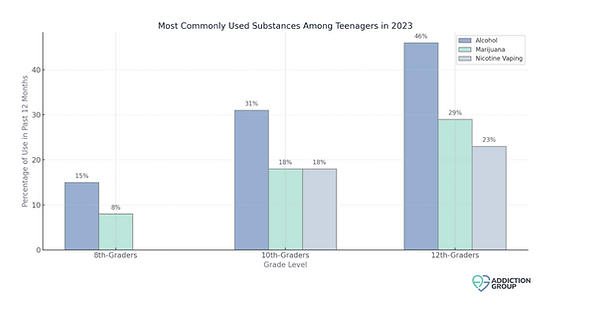
Alcohol remains the most widely used substance among teens, with approximately 46% of 12th-graders, 31% of 10th-graders, and 15% of 8th-graders reporting alcohol use in the past 12 months in 2023.
-
Marijuana is the second most commonly used substance, with about 29% of 12th-graders, 18% of 10th-graders, and 8% of 8th-graders reporting use in the past 12 months in 2023.
-
Nicotine vaping has seen significant drops but remains a concern, with 18% of 10th-graders and 23% of 12th-graders reporting use within the past year.
-
Prescription medications, such as stimulants like Adderall and Ritalin, and painkillers like OxyContin and Vicodin, are also commonly abused by teens.
-
The following graph shows the most commonly used substances among teenagers in 2023.
Substance Use Disorders Among Teenagers
A substantial number of teenagers who use drugs or alcohol develop substance use disorders, highlighting the severity of the issue.
-
Among youth aged 12 to 17, 407,000 met the criteria for an alcohol use disorder in the past year, representing a significant portion of those who consume alcohol.
-
Twice as many 12 to 17-year-olds meet the criteria for an illicit drug use disorder compared to those with an alcohol use disorder, with 788,000 teens in this age group meeting the criteria for an illicit drug use disorder in the past year.
-
The percentage of teenagers who use drugs or alcohol and subsequently develop a substance use disorder varies depending on the substance and the age group.
-
The high prevalence of substance use disorders among teens underscores the need for early intervention and accessible treatment options.
The graph below shows the overall substance use disorder among teens.

Trends in Teen Drug and Alcohol Use
Recent data indicate that the use of illegal drugs among teens has generally declined or stayed the same at lower levels compared to rates before the pandemic.
-
A survey by Monitoring the Future found that in 2023, fewer teens reported using illegal drugs in the past year compared to before the pandemic.
-
This trend suggests that the decrease in teen drug use seen during the COVID-19 pandemic has continued.
The line graph below shows the trends of alcohol and drug use among 12th graders from 2022 to 2023.
The data includes:
-
Alcohol Use: A decrease from 51.9% in 2022 to 45.7% in 2023.
-
Illicit Drug Use (excluding marijuana): Stable at 7.4%.
-
Marijuana Use: Stable at 29.0%.
-
Vaping: A decrease from 27.3% in 2022 to 23.2% in 2023.
Rise in Overdose Deaths
Despite the decline in overall substance use among teens, there has been a troubling rise in overdose deaths.
-
Deaths due to drug overdose among adolescents more than doubled from 2018 (253 deaths) to 2022 (723 deaths), with the largest increases among Hispanic and Black adolescents.
-
This increase is largely attributed to the contamination of drugs with illicit fentanyl, a potent synthetic opioid.
-
The presence of fentanyl in counterfeit pills that resemble prescription medications has made drug use more dangerous, even if the prevalence of use has not increased.
Contributing Factors to Trends
-
There are many reasons why teen drug and alcohol use goes up and down over time. Here are some of the biggest factors:
-
Social media: Content on social media can make drugs and alcohol seem cool, which might make teens more likely to try them. Teens who spend much time on social media are more at risk.
-
Mental health and stress: Teens who are stressed or anxious might use drugs or alcohol to feel better. We need to give them better help for mental health and stress.
-
Changing strategies: Instead of just saying no to everything, we’re teaching teens the risks of drugs and alcohol and how to stay safe if they do use them.
Socioeconomic Factors and Teen Drug and Alcohol Use
-
Socioeconomic factors influence teen drug and alcohol use. They shape the likelihood of substance use and the severity of its consequences. These factors include poverty, family structure, and access to prevention programs.
Poverty
-
Poverty during adolescence is a significant risk factor for developing drug use disorders later in life.
-
Adolescents experiencing poverty are more likely to use substances.
-
This increased risk is linked to the stress and challenges associated with low socioeconomic status.
-
A Swedish study found a direct correlation between adolescent poverty and drug use disorders in young adulthood.
-
The impact was more pronounced in females with 24% and 13% in males. Mental health issues in adolescence contributed to this association.
Family Structure
-
Family structure plays a crucial role in adolescent substance use.
-
Teenagers from single-parent homes, especially those living with single fathers, are more likely to use drugs than those from two-parent households.
-
This increased risk may be due to factors like differences in parental supervision, communication, and the unique challenges of single-parent families.
-
Studies have shown that daughters living with single fathers have higher rates of drug use compared to those living with single mothers.
Access to Prevention Programs
-
Prevention programs can effectively reduce the risk of substance use among teens.
-
Comprehensive prevention programs target multiple risk factors. These programs often include education, skills training, and parental involvement.
-
Evidence-based programs like LifeSkills Training and the Good Behavior Game have shown long-term benefits.
-
Fair access to prevention programs is essential for reaching all teens.
Relevant Studies
-
Here are some studies that discuss teen substance use:
-
Substance Abuse and Mental Health Services Administration (SAMHSA): According to SAMHSA, adolescents living in households with lower family incomes are at a higher risk for mental illness, substance use disorders, and co-occurring disorders.
-
Monitoring the Future (MTF): The MTF survey has consistently shown that substance use varies significantly among different socioeconomic statuses, with higher rates of alcohol and drug use reported among teens in higher socioeconomic brackets, potentially due to greater disposable income and access.
-
Community Influence: Research published in the American Journal of Public Health found that community-level interventions focusing on improving neighborhood conditions and increasing community
-
cohesion were effective in reducing substance use among adolescents.
-
These studies show that complex factors can influence teen drug use, such as socioeconomic status, community environment, and personal risks. We need a comprehensive approach to help teens deal with this problem.